Get your FREE 15 min Consultation
If you are struggling with sexual problems, do not hesitate to call for help. I am offering you a 15-minute consultation to help you understand whether your problem requires professional therapy.
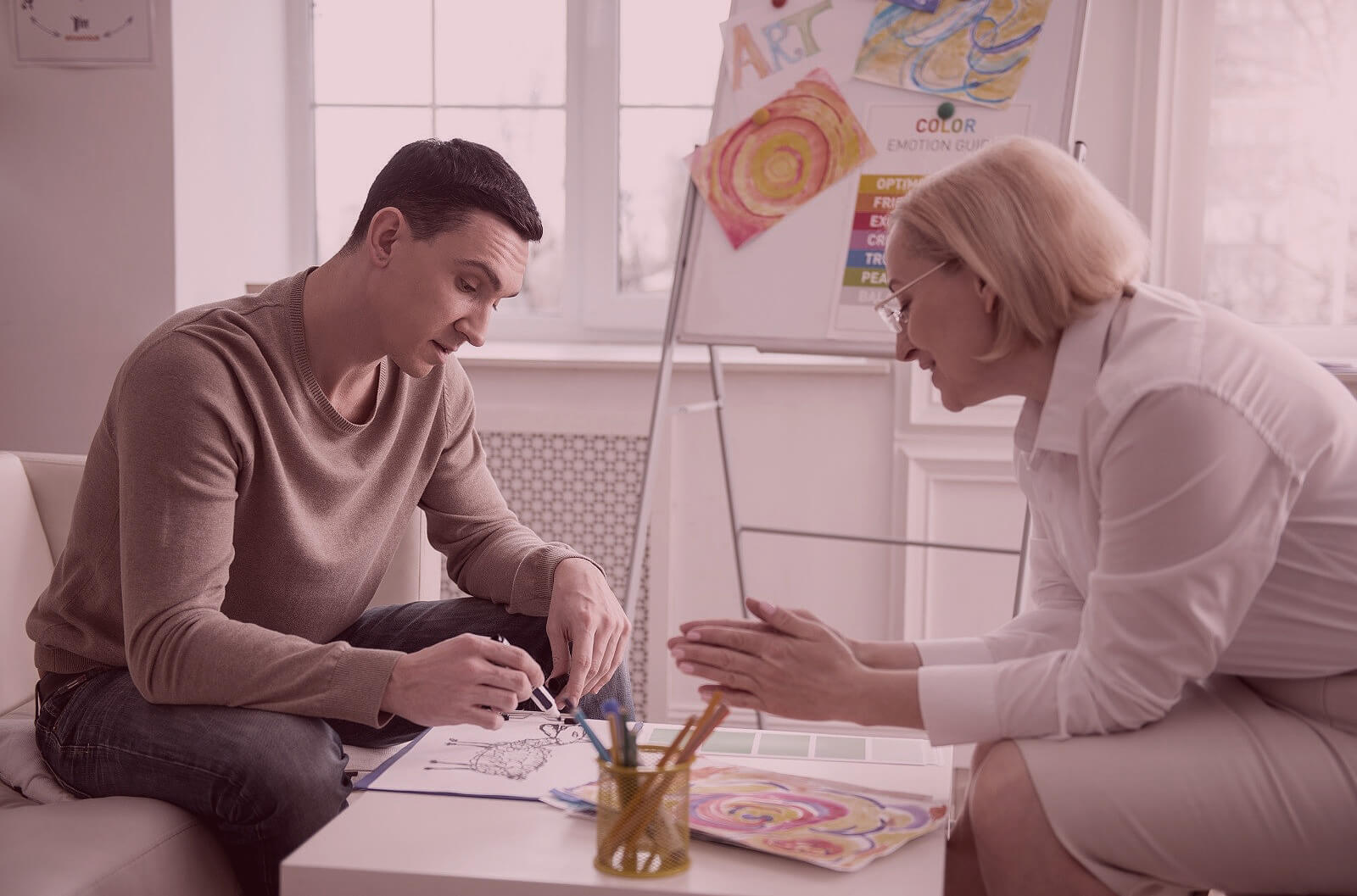
Have you ever listened to a song and suddenly found yourself crying over something you thought you had dealt with three years ago? Or watched a movie and wondered why a fictional woman’s breakup feels suspiciously similar to your own love life?
And don’t even get me started on the songs we play on repeat when we’re going through a breakup. Apparently, we sometimes need to hear the same three minutes of heartbreak 47 times before our brain gets the message.
But there is something genuinely fascinating happening beneath these experiences. Music, movies, art and creative expression can help us connect with emotions that are difficult to explain, understand ourselves more deeply, and find ways to express what we are going through.
As a therapist, I find this particularly interesting because emotional healing isn’t always about talking through everything. Sometimes, we need a different way to access, explore and express what is happening inside us.
Let’s look at the psychology behind it, what happens in the brain, and how we can use creativity to turn difficult emotions into something meaningful.
Music is one of the most accessible ways to experience emotional processing. You don’t need to be musically talented, understand music theory, or own an instrument. Sometimes, all you need is a pair of headphones and a willingness to feel whatever comes up.
Think about how differently you feel when listening to an upbeat song compared with a slow, melancholic melody. One might make you want to dance around your kitchen like you’re starring in your own music video. The other might bring up memories, longing, sadness or a feeling you haven’t been able to put into words.
There is a psychological reason for this.
Music engages interconnected brain networks involved in hearing, memory, emotion, attention and reward. Research has explored how music interacts with the amygdala, which plays a role in processing emotionally significant information, and the hippocampus, which is important for memory.
This helps explain why a particular song can transport you back to a specific relationship, holiday, childhood experience or period of your life. You aren’t simply remembering an event; you’re experiencing some of the emotional associations attached to it.
Research published in 2024 examined music’s role in emotional regulation and reviewed studies involving listening to, playing and creating music. The findings suggest that musical activities can support our ability to regulate emotions and contribute to wellbeing.
You can read the systematic review on music and emotion regulation for more scientific detail.
It can be.
Sometimes, music gives us permission to experience sadness without immediately trying to fix it. We might finally cry, acknowledge how much something hurt, or recognise that we are still grieving a person or a version of ourselves.
Other times, music helps us access anger, confidence, joy or motivation.
The important distinction is that feeling an emotion isn’t necessarily the same as processing it. Listening to sad music might help you acknowledge grief, but if you repeatedly use it to reinforce hopeless thoughts, it may leave you feeling worse.
Pay attention to what happens afterwards. Do you feel lighter, clearer or more connected to yourself? Or do you feel increasingly stuck in the same emotional loop?
Your emotional wellbeing matters more than following any particular rule about what music you should listen to.
Have you ever watched a movie and thought, “Oh my God, that’s literally me”?
Perhaps a character struggles to set boundaries, falls for someone emotionally unavailable, loses herself in a relationship, or finally decides she’s had enough and starts choosing herself.
Suddenly, you’re not just watching a film. You’re recognising parts of your own experience.
Psychologists study this through concepts such as character identification and narrative transportation. Narrative transportation describes becoming mentally and emotionally immersed in a story, while character identification involves imagining events from a character’s perspective and sometimes sharing their emotional experience.
Research published in Current Psychology found that immersion in a narrative and engagement with it can help explain why people identify with fictional characters.
Read the research on character identification and narrative immersion to explore this further.
One of the interesting things about identifying with a character is that we can sometimes recognise a pattern more easily when we see it happening to somebody else.
You might notice that a character constantly seeks validation, ignores red flags, struggles to trust others or sacrifices her needs to keep a relationship alive.
Initially, you might judge her decisions. Then you realise you’ve made similar choices yourself.
And suddenly, the question changes from “Why is she doing this?” to “Why do I do this, too?”
That shift can create an opportunity for self-reflection.
Stories allow us to explore complicated situations at a psychological distance. We can consider different choices, imagine alternative outcomes and develop empathy for experiences that might otherwise be difficult to understand.
Of course, identifying with a character doesn’t automatically mean you have the same psychological patterns or that the character’s choices are healthy. But it can provide a useful starting point for curiosity.
Next time a film affects you deeply, ask yourself:
Sometimes, the most revealing part of a movie is the conversation you have with yourself afterwards.
Not every emotion arrives with a neat explanation attached.
Sometimes, we know something hurts, but we cannot explain why. We might feel restless, disconnected, frustrated or overwhelmed without being able to identify the underlying need.
This is where creative expression can be valuable.
Painting, drawing, dancing, writing, photography, singing, crafting and other artistic activities offer different ways to explore our internal experiences.
You don’t have to produce something beautiful. You don’t have to be talented. And you certainly don’t need to create something worthy of an Instagram post.
Your inner world isn’t auditioning for an art exhibition.
The point is to give your experience somewhere to go.
A 2024 systematic review examined research into the neurological mechanisms involved in creative arts and their potential therapeutic effects. The preliminary findings suggested that creative engagement may involve brain networks associated with emotional regulation, including interactions involving the medial prefrontal cortex and amygdala.
The medial prefrontal cortex contributes to several functions, including aspects of self-reflection and emotional regulation. The amygdala helps process emotionally significant information.
These functions are part of broader, interconnected networks rather than isolated brain regions working independently.
The evidence is promising, but the research base remains limited. We cannot claim that a particular painting exercise will activate a specific brain pathway in exactly the same way for everyone.
What we can say is that creative activities provide opportunities to pay attention to emotions, organise our experiences, explore meaning and experiment with different ways of expressing ourselves.
For a more detailed overview, see the research review How the Arts Heal.
You may have heard that creativity activates the right brain while logic belongs to the left, and that artistic activities connect the two hemispheres.
The reality is more complicated.
Both hemispheres participate in many aspects of perception, emotion, creativity and reasoning. These functions depend on distributed neural networks that communicate across the brain.
Creative activities can combine sensory information, memories, emotional associations, attention and decision-making. They are not simply a matter of switching on one hemisphere.
The exciting part is that we can engage with our experiences in different ways. We can think about an emotion, notice how it feels in our body, associate it with a memory, and then express it through movement, images, sounds or words.
This can give us more than one route towards understanding what we feel.
And sometimes, that alternative route is exactly what we need.
Imagine you’ve been carrying frustration for weeks.
You keep telling yourself that you’re fine. You continue working, answering messages, looking after everyone else and pretending the situation isn’t affecting you.
But internally, you’re exhausted.
One day, you put on music and dance. You start writing in your journal. You paint something messy and expressive. You go for a run, sing loudly in the car or finally have a conversation you’ve been avoiding.
The circumstances might not change immediately, but your relationship with the experience can begin to change.
Creative expression can help us move from passively carrying an emotion towards actively engaging with it.
It gives us something to do with the experience.
This doesn’t mean that every difficult emotion needs to be transformed into productivity or that we should always find a positive lesson in pain. Sometimes, sadness simply needs to be acknowledged. Sometimes, anger is telling us that a boundary has been crossed. Sometimes, grief cannot be rushed.
But over time, we may find ways to use what we have learned to make different choices, create something meaningful or connect with other people.
For example:
This is not about making suffering worthwhile by forcing it to produce something impressive.
It is about recognising that our experiences can become part of our growth without defining the rest of our lives.
There is something powerful about discovering that an experience you once struggled to understand might eventually help another person feel less alone.
Perhaps you create a song about heartbreak. You write a book about rebuilding your life. You make a painting that expresses something words never quite captured. Or you share your story with a friend who has been hiding the same feelings.
Your experience becomes a bridge between you and someone else.
This is one of the reasons I value creative expression so much. It can give form to experiences that are difficult to communicate, helping us make them more accessible to ourselves and, when we choose to share them, to other people.
But there is an important distinction: you don’t owe anyone a lesson, a performance or a beautiful piece of art in exchange for what you’ve been through.
You are allowed to heal privately.
You are allowed to create something that nobody else ever sees.
And you are allowed to decide that an experience has taught you enough without turning it into a business, a book or a personal brand.
If you eventually choose to share what you’ve learned, let it come from a place of choice rather than pressure.
Your pain does not need to become a product to have meaning.
At Love Empowerment Clinic, I take a holistic approach to emotional healing. I believe that understanding our experiences involves more than analysing our thoughts. It can also involve exploring our feelings, bodily responses, memories, relationships and the ways we express ourselves.
As a therapist, I draw on approaches including psychotherapy, Internal Family Systems, art therapy and somatic practices, tailoring the process to the person sitting in front of me.
Creative approaches can be particularly helpful when someone struggles to put their experience into words, feels disconnected from their emotions, or wants to explore a difficult experience from a different perspective.
For example, an art-based exercise might help someone explore an emotion symbolically before attempting to explain it. A song or film might open up a conversation about attachment, boundaries, grief or intimacy. A reflective exercise might help someone identify a pattern they have repeated in relationships.
These activities are not magic solutions, and they do not replace appropriate psychological assessment or treatment. Rather, they can complement a therapeutic process that respects each person’s needs, pace and circumstances.
If you’d like to explore these approaches, you can learn more about my art therapy and trauma processing course, read about emotional expression and healing, or discover how somatic and Reiki approaches can support emotional release.
I also explore the relationship between difficult experiences and personal growth in my article about deeper emotional healing.
If you would like individual support, visit the Love Empowerment Clinic homepage to learn more about my services and how to book a consultation.
You don’t need to enrol in a course, buy expensive art supplies or wait for a particularly dramatic life event. You can start with what you already have.
Choose three to five songs that reflect what you’re feeling right now.
Don’t choose songs based on what you think you should feel. Choose the ones that genuinely resonate.
After listening, ask yourself what emotions came up, what memories surfaced and whether you feel any differently.
Choose a colour, shape or image that represents your current emotional state.
You might draw a tangled mess, a storm, an open window or something that makes sense only to you.
Then ask yourself what the image might be communicating. There is no correct interpretation.
Choose a story that resonates with something you’re experiencing.
Notice which characters you empathise with, which decisions frustrate you and which moments make you emotional.
Afterwards, write down what the story revealed about your own needs, values or relationships.
Write a letter expressing everything you wish you could say to a person, a past version of yourself or a difficult situation.
You don’t have to send it. The purpose is to explore your thoughts honestly, not to create another complicated relationship conversation.
After exploring your emotions, ask yourself: “What would help me now?”
Perhaps you need rest, a boundary, a conversation, a creative project or professional support.
The aim isn’t to force every emotion into an action plan. It’s to notice whether your emotional exploration has revealed a need you can respond to with care.
If an activity makes you feel significantly more distressed, overwhelmed or disconnected, pause and choose something grounding. You can return to the experience later, ideally with appropriate support if needed.
We often assume that we must understand an emotion before we can do anything with it.
But sometimes, understanding emerges through the process itself.
A song reminds you of something you forgot. A character reveals a pattern you hadn’t noticed. A painting helps you express a feeling you couldn’t name. A conversation helps you recognise what you need.
Emotional processing through art, music and film gives us opportunities to approach our experiences from different directions.
It can help us reflect, develop self-awareness, explore emotional regulation and discover new ways of expressing ourselves. For some people, these practices become meaningful parts of their ongoing emotional wellbeing. For others, they work best alongside therapy or other forms of support.
And perhaps the most important thing is this: you don’t have to turn every difficult experience into a masterpiece.
Sometimes, healing looks like crying to a song, painting something terrible, laughing at a character who reminds you of your ex, and finally understanding yourself a little better.
And if one day you turn that understanding into something that helps another person feel seen, that’s wonderful, too.
Your emotions deserve to be heard. Your creativity doesn’t need to be perfect. And your healing doesn’t have to follow anybody else’s script.
If you’d like support exploring your emotions, relationships or personal growth, I’d love to welcome you to Love Empowerment Clinic.
Visit Love Empowerment Clinic to explore my services and find out how we can work together.
No account yet?
Create an Account