Get your FREE 15 min Consultation
If you are struggling with sexual problems, do not hesitate to call for help. I am offering you a 15-minute consultation to help you understand whether your problem requires professional therapy.
Have you ever dressed up as a witch, a goddess, a vampire or a character from your favourite movie and wondered why you were drawn to that particular character?
Maybe you simply thought the outfit looked fabulous. Fair enough. I support any excuse to wear a dramatic outfit.
But what if there is a little more to it?
When we explore the Halloween meaning beyond the costumes, candy and questionable decisions made after a few drinks, we can use this playful occasion as an opportunity for self-discovery. The character we choose might reflect something we are going through, a quality we admire, or even a part of ourselves we have been hiding.
From a spiritual perspective, I also like to consider whether our choices might feel meaningful on a deeper level — almost as though our higher self is inviting us to pay attention to something within us.
This doesn’t mean every Halloween costume is a supernatural message. Sometimes a witch is just a witch. But sometimes, the things we feel drawn to can tell us something interesting about ourselves.
And that is where archetypes come in.
Halloween has a rich cultural history, and today people celebrate it in many different ways. For some, it is simply an opportunity to dress up and have fun. For others, it carries spiritual associations with mystery, transformation, death and rebirth.
I find the symbolic side particularly interesting because these themes are also present in our emotional lives.
Think about it. We all go through periods of letting go, changing identities, facing our fears and becoming someone new. Sometimes we are shedding an old version of ourselves. Other times, we are discovering qualities we didn’t know we possessed.
Halloween gives us a playful way to explore these themes.
Perhaps you are drawn to a powerful goddess because you are learning to reclaim your confidence. Maybe you choose a mysterious witch because you are becoming more comfortable with your intuition. Or perhaps you dress as a rebellious movie character because a part of you is absolutely exhausted from being the good girl who never disappoints anyone.
Relatable? I thought so.
From a spiritual perspective, you might interpret that attraction as a message from your higher self. From a psychological perspective, it might reflect your current interests, emotions, aspirations or self-image.
You don’t have to choose between curiosity and discernment. You can explore the meaning without assuming there is only one correct interpretation.
The concept of archetypes is closely associated with Carl Jung, the Swiss psychiatrist who developed analytical psychology.
Jung explored recurring symbolic patterns and figures that appear in myths, dreams, religious imagery and stories across cultures. These include figures such as the Hero, the Mother, the Wise Old Person and the Shadow.
Archetypes offer a way to explore recurring themes in human experience. They can help us think about identity, relationships, power, vulnerability and the parts of ourselves we struggle to understand.
I find this especially interesting because we don’t only encounter archetypes in ancient mythology or spiritual traditions. We see them in modern films, books, television shows and even the characters we admire on social media.
Think about the fearless heroine, the misunderstood villain, the nurturing mother, the rebellious outsider or the wise mentor.
Each character represents a collection of qualities and associations. When we connect with a character, we may recognise something we already possess, something we want to develop, or something we have learned to suppress.
This is one reason archetypes can be useful for self-exploration.
You can read more about Jungian analytical psychology if you would like to explore the psychological background in greater depth.
Let’s imagine you have three options for a Halloween party: a princess, a witch or a villain.
Which one are you instinctively drawn to?
Now, before you spend three hours analysing your childhood because you picked the villain, relax. There is no psychological test hiding inside your costume shop.
However, the character you choose can be an interesting starting point for reflection.
The witch is often associated with mystery, independence, intuition and feminine power.
If you are drawn to this archetype, you might be exploring your relationship with your own instincts. Perhaps you are learning to trust yourself instead of constantly asking everyone else for advice.
Maybe you are becoming more comfortable being different, questioning expectations or acknowledging parts of yourself you once felt compelled to hide.
From a spiritual perspective, the witch might symbolise a desire to reconnect with your inner wisdom.
And if you have spent years being the agreeable woman who never rocks the boat, perhaps your inner witch is simply ready to cancel a few unnecessary commitments.
Goddess figures can represent different qualities depending on the tradition, culture and individual interpretation.
Some are associated with love and beauty. Others represent wisdom, protection, creation, destruction or fierce independence.
If you feel drawn to a particular goddess, ask yourself what you admire about her.
Is it her confidence? Her sensuality? Her ability to protect herself? Her willingness to stand up for what she believes in?
Perhaps you are entering a chapter in which you want to embody those qualities more fully.
For women especially, exploring feminine archetypes can be a way of questioning the narrow roles we are sometimes expected to occupy.
You can be nurturing and ambitious. Sensual and intelligent. Gentle and assertive.
You don’t have to choose one version of yourself and discard the others.
Now we are getting interesting.
Why would someone want to dress as a villain?
Perhaps the character is iconic. Perhaps the costume is incredible. Or perhaps there is something compelling about a character who refuses to follow the rules.
In Jungian psychology, the Shadow refers broadly to aspects of ourselves that we struggle to acknowledge or integrate into our conscious identity.
This doesn’t mean the Shadow is evil. It might include anger, ambition, jealousy, sexuality, confidence or a desire for independence — qualities we have learned are unacceptable.
For example, a woman who has always been praised for being sweet and accommodating might struggle to express anger or say no.
She may judge assertiveness as selfishness, even when she desperately needs stronger boundaries.
Exploring a bold or rebellious character could help her ask an interesting question:
What if the quality I judge in other people is something I need to understand within myself?
Of course, identifying with a villain doesn’t mean you secretly want to become one. It may simply give you an opportunity to explore qualities that feel unfamiliar or forbidden.
And no, wearing a black cape does not automatically mean you need shadow work. Although if you have been avoiding your feelings for the last five years, we might have something to discuss.
The Hero archetype is often associated with courage, challenges, perseverance and transformation.
If you are drawn to a heroine who overcomes adversity, perhaps you admire her ability to keep going when life gets difficult.
You might be navigating a breakup, changing careers, rebuilding your confidence or learning to trust yourself again.
Sometimes we admire characters because they embody qualities we are already developing.
Other times, they represent qualities we would like to strengthen.
Either way, the useful question isn’t whether the character predicts your future. It’s whether the story helps you recognise something important about your present.
Not every archetype has to be powerful, mysterious or intimidating.
Sometimes we are drawn to characters who represent innocence, imagination, curiosity or freedom.
Perhaps you choose a colourful cartoon character you loved as a child. Maybe you dress as someone delightfully ridiculous because you want to stop taking yourself so seriously.
I think there is something valuable about that.
Many adults become so focused on responsibilities, productivity and self-improvement that they forget to play.
Exploring the inner child can help us reconnect with creativity, spontaneity and the parts of ourselves that didn’t need to justify every little thing they enjoyed.
If this resonates with you, my Inner Child Work with a Spiritual Twist course is one of the resources available through Love Empowerment Clinic.
I believe there is something fascinating about the way humans connect with symbolic figures.
A person might pray to Jesus and experience comfort, hope, forgiveness or a sense of connection. Someone else might feel inspired by Athena, drawn to the symbolism of Kali, or moved by a fictional character who represents courage and independence.
These experiences can have different meanings depending on a person’s beliefs, culture and personal history.
From a spiritual perspective, some people understand these connections as an interaction with divine or energetic qualities. From a psychological perspective, the same symbols can provide a language for exploring emotions, values and aspirations.
I find it useful to remain open to the personal meaning of these experiences without assuming that everyone must interpret them in the same way.
You don’t necessarily have to believe that a fictional character or deity is literally communicating with you to benefit from what that figure represents.
For example, imagine you are fascinated by a character who is unapologetically confident.
You might begin by asking what you admire about her. Then you might notice that you struggle to express your own opinions, ask for what you want or tolerate disappointing other people.
Suddenly, the character becomes more than entertainment. She becomes a prompt for self-reflection.
From a spiritual perspective, you might describe this as connecting with an energy. From a psychological perspective, you might describe it as identifying with a symbolic representation of a quality you want to explore.
Both interpretations can lead to a meaningful question: How can I bring more of this quality into my own life in a healthy way?
Exploring archetypes can be useful because it gives us a little distance from our usual self-image.
Sometimes it is easier to acknowledge a difficult emotion when we approach it through a character, a story, a drawing or a symbolic figure.
For example, saying, “I want to be more assertive” can feel uncomfortable if you have spent years believing that being a good woman means keeping everyone happy.
But imagining yourself as a fearless heroine might help you explore what assertiveness looks like without immediately judging yourself.
You can begin to ask questions such as:
This kind of reflection can overlap with shadow work, inner child exploration, creative practices and other forms of personal development.
It is important to remember that archetypes are interpretive tools, not diagnoses. They don’t reveal a person’s entire personality, and there is no scientifically established rule that a particular costume corresponds to a particular psychological issue.
The value lies in what you discover through thoughtful exploration.
At Love Empowerment Clinic, I believe meaningful healing involves understanding more than the surface-level behaviour we want to change.
Sometimes we need to explore the beliefs, emotions, protective patterns and experiences underneath it.
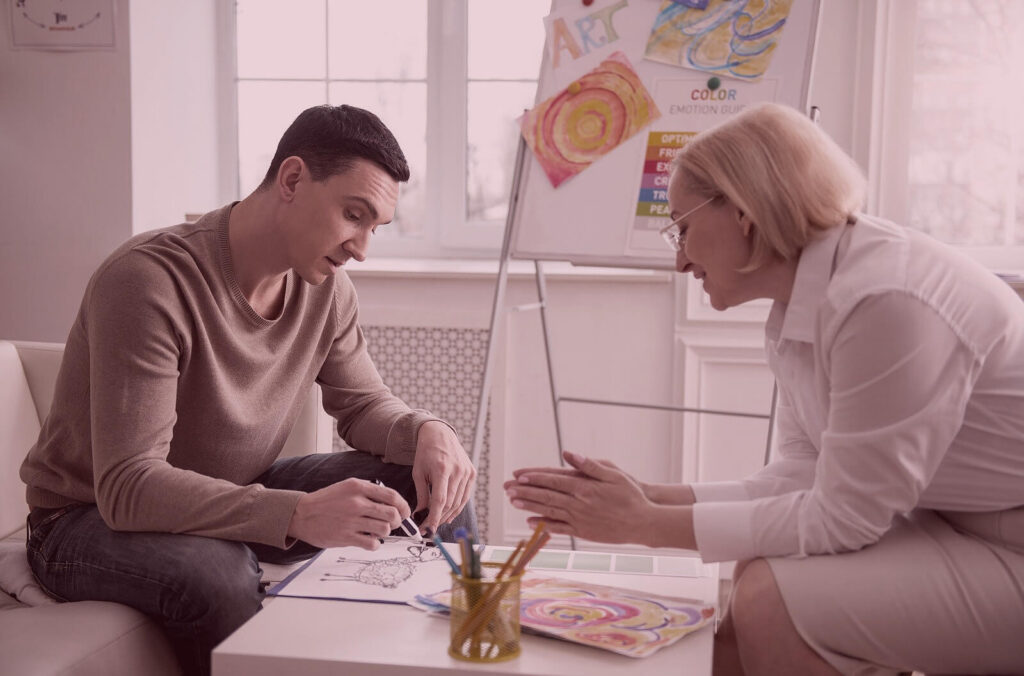
In my work, I combine evidence-informed psychotherapy approaches with holistic and spiritual practices where appropriate. Depending on the person’s needs, this may include Internal Family Systems, art therapy, emotional processing and spiritual exploration.
For example, if someone struggles with boundaries, we might explore why saying no feels threatening. If someone repeatedly chooses emotionally unavailable partners, we might look at the patterns and beliefs influencing those relationships.
Creative and symbolic exercises can sometimes help people approach these questions with greater curiosity and compassion.
My aim isn’t to tell people who they are or what their experiences must mean. It is to help them understand themselves more deeply, develop healthier patterns and make choices that reflect their own values.
You can learn more about my Internal Family Systems Therapy and the different services at Love Empowerment Clinic.
Whether or not you celebrate Halloween, you can use this idea as a little exercise in self-awareness.
You don’t need a costume, a tarot deck or a dramatic candlelit ritual. Although I won’t judge you if you have all three.
Step 1: Choose a character or archetype.
Think of a fictional character, mythological figure, deity or symbolic figure you feel drawn to at the moment.
Don’t overthink it. Notice what comes to mind.
Step 2: Identify the qualities you associate with them.
Are they courageous, sensual, independent, compassionate, rebellious, wise, mysterious or playful?
Focus on the qualities that matter to you rather than trying to find the one correct interpretation.
Step 3: Notice your emotional response.
Do you feel inspired, uncomfortable, excited, intimidated or curious?
Sometimes our strongest reactions can tell us where we have something worth exploring.
Step 4: Ask what this might reflect about your life.
Are you longing for more freedom? Learning to set boundaries? Recovering from heartbreak? Wanting to express your creativity? Trying to reconnect with your body?
Allow yourself to consider different possibilities without forcing an answer.
Step 5: Choose one small action.
If the character represents courage, perhaps you finally have that conversation you have been avoiding.
If she represents self-love, perhaps you stop entertaining a relationship that consistently leaves you feeling inadequate.
If she represents playfulness, perhaps you do something enjoyable without turning it into another self-improvement project.
The point isn’t to become someone else. It is to discover more of who you already are.
I don’t believe we need to interpret every coincidence, dream or costume as a cosmic instruction.
But I do think there is value in paying attention to the symbols, stories and characters that resonate with us.
Sometimes they reflect qualities we already embody. Sometimes they point towards qualities we want to develop. And sometimes they simply remind us that we are allowed to experiment with different expressions of ourselves.
If you feel that your higher self is communicating with you through a particular archetype, you can explore that possibility while remaining curious about other explanations, too.
You don’t need to turn every Halloween party into a therapy session. But if your chosen character makes you stop and think about who you are becoming, perhaps there is something worth exploring.
And remember: you can be the witch, the goddess, the heroine and the woman who occasionally wants to stay home in her pyjamas and ignore everyone.
Human beings are wonderfully complex. We don’t have to squeeze ourselves into one archetype.
Sometimes personal growth is simply learning to give more parts of ourselves permission to exist.
Curious about what you might discover? At Love Empowerment Clinic, I support individuals and couples with emotional processing, self-esteem, relationship patterns and deeper self-understanding. You can explore my services or get in touch to discuss whether working together would suit your needs.
Explore other articles, books and online courses. Or work with me, explore my services on the Home Page. Book your FREE 15min phone consult.
No account yet?
Create an Account