Get your FREE 15 min Consultation
If you are struggling with sexual problems, do not hesitate to call for help. I am offering you a 15-minute consultation to help you understand whether your problem requires professional therapy.
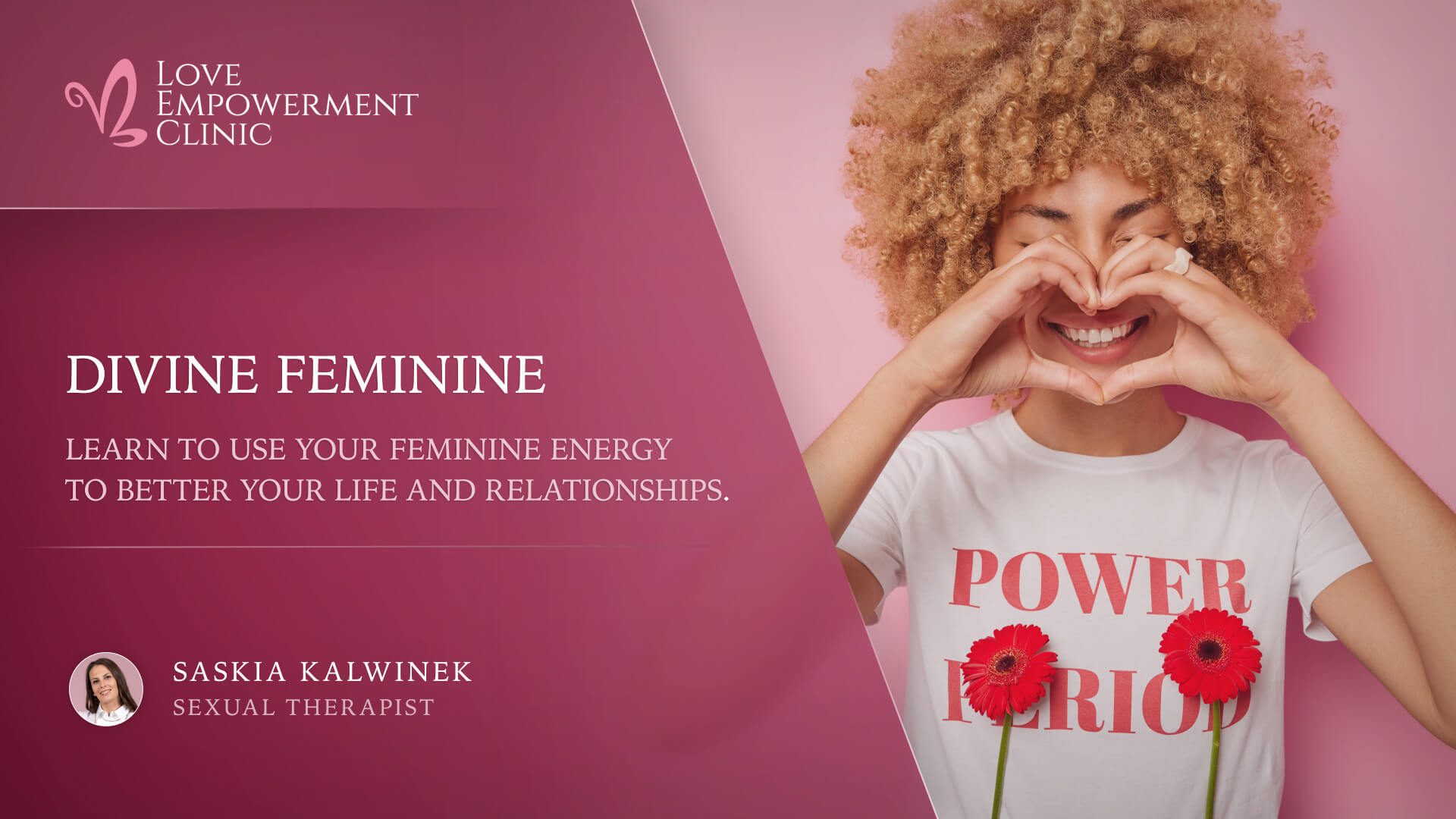
The cover photo is from my “Divine Feminine” online course, you can access it here.
I explain how to work with your body, menstrual cycle, communication and emotions in order to develop a wonderful feminine energy within you by also working with your masculine side.
There’s a lot of talk right now about women’s anger — and honestly, it’s overdue. What’s less talked about is what to do with it. Not how to suppress it, not how to weaponise it, but how to process it properly.
When I talk about collective women pain, I’m not talking about blaming men, rejecting relationships, or rewriting history into a simplistic “oppressor vs victim” narrative. I’m talking about the emotional residue that accumulates over generations when people don’t have power, voice, or choice — and what happens when that residue finally surfaces.
Processing that pain is not the same as acting it out.
One of the unfortunate side effects of long-term suppression is that when anger finally arrives, it often comes out sideways. We see it expressed as contempt, withdrawal, blanket rejection of men, or rigid ideological positions that don’t actually lead to healing.
Feeling anger, hatred, grief, or frustration does not require humiliating another gender or positioning yourself as morally superior. Emotional processing is an internal act, not a performance. This is what I mean by collective women Pain.
From a therapeutic perspective, unexpressed emotion doesn’t disappear — it gets stored in the nervous system, shows up in relationships, and quietly dictates who we’re attracted to, what we tolerate, and how safe we feel with intimacy.
Allowing women to feel their anger without discharging it onto men or society is not weakness — it’s emotional maturity.
Yes, patriarchal systems caused harm. That’s not controversial. But reacting to that harm by swinging to the opposite extreme — where men are framed as inherently unsafe, incompetent, or disposable — doesn’t actually resolve the original wound.
It just recreates it in a different form.
Many versions of modern radical feminism are less about empowerment and more about unprocessed grief and rage. Understandable, yes. Sustainable or healing? Not really.
Healing happens when women are allowed to say:
“I am angry.”
“I am disappointed.”
“I feel betrayed by history, relationships, and systems.”
And then stay with those emotions long enough for them to metabolise — without turning them into identity or ideology.
We’re seeing record-high divorce rates, declining birth rates, and a growing number of women opting out of relationships altogether. That’s not because women suddenly became cold or unrealistic. It’s because many are no longer willing to over-function emotionally for partners who haven’t done their inner work.
A lot of relationships today aren’t driven by conscious love — they’re driven by attachment wounds, childhood trauma, and ancestral patterning. When those patterns remain unexamined, intimacy turns into power struggles, avoidance, or emotional labour imbalance.
From my work as a therapist, I don’t see “bad men” or “difficult women.”
I see people who were never taught how to feel, regulate, repair, or take responsibility for their emotional impact.
Many women are choosing not to settle — not because they hate men, but because they don’t want to build a life with someone who avoids responsibility, emotional depth, or accountability.
Waiting for a partner with emotional intelligence, relational skills, and the capacity to co-regulate isn’t entitlement — it’s discernment.
And yes, that means some people will remain single longer.
Yes, that may mean fewer children for now.
That’s not a crisis — it’s a correction.
Children deserve emotionally present parents, not adults reenacting unresolved trauma under the banner of “family values”.
The gender pay gap is real — but it’s also more complex than “women are paid less because they’re women.”
Many women consciously choose professions centred around care, healing, and relational work — often for better work-life balance or values alignment. Those professions are systematically underpaid because society undervalues care itself.
That’s a structural issue — not a personal failure, and not proof that women need to compete with men on male terms to be worthy.
Processing collective women pain requires restraint, honesty, and emotional containment.
It means:
Allowing anger without turning it into aggression
Feeling grief without outsourcing blame
Recognising ancestral patterns without becoming trapped in them
Choosing self-betterment over moral superiority
This is the work I do in therapy — individually and with couples. Not to “fix” people, but to help them stop unconsciously bleeding into their relationships.
Avoiding emotions, outsourcing responsibility, hiding behind narcissistic defences, or blaming women for relational breakdowns isn’t strength — it’s avoidance.
Healing requires men to look inward, tolerate discomfort, and take responsibility for their emotional world instead of expecting intimacy without effort.
This isn’t about sides.
It’s about grown adults learning how to love without reenacting trauma.
Loneliness isn’t cured by half-connections.
Love isn’t built on unresolved pain.
And empowerment isn’t loud — it’s regulated, grounded, and self-aware.
The real revolution isn’t against men or women.
It’s against unexamined emotional inheritance.
Explore other articles, books and online courses. Or work with me, explore my services on the Home Page. Book your FREE 15min phone consult.
No account yet?
Create an Account