Get your FREE 15 min Consultation
If you are struggling with sexual problems, do not hesitate to call for help. I am offering you a 15-minute consultation to help you understand whether your problem requires professional therapy.
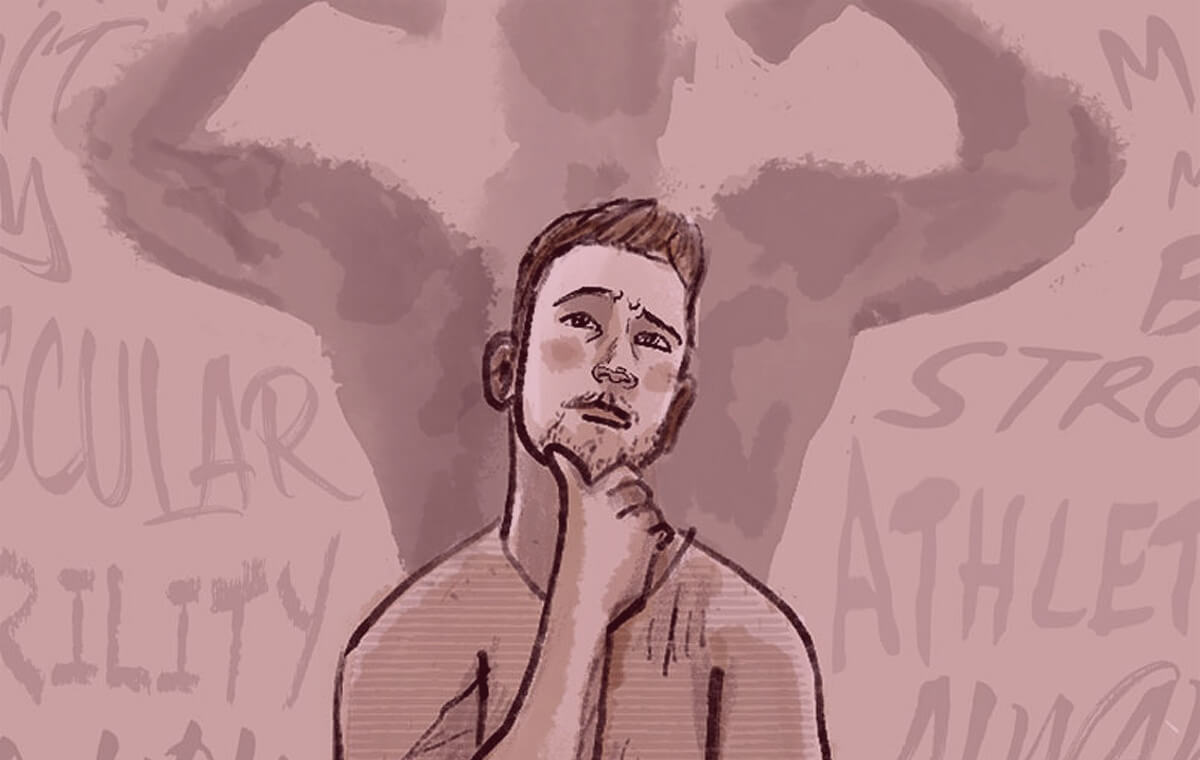
I have a somewhat controversial opinion.
I think many therapists, educators, and commentators have made a mistake when it comes to the Red Pill movement.
Not because I agree with its worldview.
I don’t.
But because while many of us were busy dismissing it, millions of young men were listening.
The question we should be asking isn’t, “Why are these men watching Red Pill content?”
The better question is:
“What need is it fulfilling?”
Because despite the often toxic advice, simplistic thinking, and occasional outright misogyny, Red Pill creators understand something that many mental health professionals have forgotten:
People need clarity.
People need role models.
People need practical guidance.
And young men are desperately searching for examples of what it means to be a man.
Unfortunately, modern society often tells men what not to be.
Don’t be weak
Don’t be a girl
Don’t be aggressive.
Don’t be sexist.
It can get confusing, because there is a lot of conflicting messages.
But what exactly should they be instead?
That’s where the conversation often stops.
And when no healthy role models step forward, unhealthy ones fill the gap.
Let’s be honest.
Many Red Pill creators are charismatic.
They speak with certainty.
They provide clear rules.
They offer a sense of belonging.
And they make complicated life problems sound incredibly simple.
Struggling with dating?
Get rich.
Build muscle.
Buy a fancy car.
Become an “alpha.”
Problem solved.
Except it isn’t.
Many of these creators project what appears to be confidence but is often closer to grandiosity.
True confidence says:
“I know my strengths and weaknesses.”
Grandiosity says:
“I am better than everyone else.”
True confidence creates connection.
Grandiosity creates distance.
Yet for a young man who feels lost, uncertain, rejected, or invisible, certainty can be incredibly attractive.
Especially when nobody else is offering an alternative.
I say this as a therapist.
Sometimes we make things too complicated.
Psychology loves abstract concepts.
Presence.
Mindfulness.
Emotional processing.
Self-awareness.
Regulation.
Integration.
Wonderful concepts.
But what do they actually mean?
When I was younger, I saw several psychologists for anxiety.
I left many sessions more confused than when I arrived.
People would tell me to:
“Be mindful.”
“Breathe.”
“Observe your thoughts.”
Great.
But nobody explained what I was actually supposed to do when I felt overwhelmed.
Nobody explained what emotional processing was.
Nobody explained how to sit with a feeling instead of running from it.
So I understand why many people feel disconnected from therapy language.
If we want to help men, we need to make these concepts practical.
Emotional regulation does not mean suppressing emotions.
It does not mean pretending you’re fine.
It does not mean breathing until the feeling disappears.
In fact, many people use breathing exercises to avoid feeling altogether.
Healthy emotional regulation means:
Feeling the emotion without becoming the emotion.
Let’s use anger as an example.
An emotionally immature response might look like:
A regulated response might look like:
The goal is not to eliminate emotions.
The goal is to stop acting them out onto the people you love.
Healthy masculinity isn’t weakness.
It isn’t passivity.
It isn’t becoming less masculine.
It’s becoming more mature.
Here are some examples.
When his partner talks, he listens.
Not because he’s waiting for his turn to speak.
Because he genuinely wants to understand.
Not controlling.
Protective.
He wants the people he loves to feel safe physically and emotionally.
When he makes a mistake, he owns it.
No excuses.
No blame.
No endless defensiveness.
He doesn’t explode every time life becomes uncomfortable.
He can tolerate frustration, disappointment, rejection, and uncertainty.
Strength without compassion becomes domination.
Compassion without strength becomes helplessness.
Healthy masculinity requires both.
He does what he says he will do.
His words and actions match.
People trust him because he is reliable.
This may surprise some internet influencers.
Most women are not lying awake at night fantasising about a Lamborghini.
Sure, attraction matters.
Financial stability matters.
Physical health matters.
But long-term relationships thrive on something deeper.
Most women I work with want a man who:
In other words:
Women are often looking for emotional maturity.
Not just status.
Not just money.
Not just muscles.
Those things may get attention.
Emotional safety creates lasting relationships.
The answer is not to shame men.
The answer is not to mock masculinity.
The answer is not to tell boys they are inherently problematic.
The answer is to provide better examples.
Men who are strong and compassionate.
Confident and humble.
Protective and emotionally intelligent.
Disciplined and connected.
Men who can sit with discomfort instead of projecting it onto others.
Men who understand that true strength isn’t the absence of emotion.
It’s the ability to hold emotion without becoming controlled by it.
If we want to compete with the Red Pill movement, we cannot simply criticise it.
We need to offer something better.
Something clearer.
Something practical.
Young men are searching for guidance.
The question is whether healthy voices are willing to step forward and provide it.
As a psychotherapist, sexologist, and relationship therapist, much of my work involves helping men and women understand emotions, improve communication, build emotional resilience, and create healthier relationships. The goal isn’t to become less masculine or more feminine. It’s to become more conscious, emotionally mature, and capable of building meaningful connections with others.
Explore other articles, books and online courses. Or work with me, explore my services on the Home Page. Book your FREE 15min phone consult.
No account yet?
Create an Account